
A roadmap for Councils
Violence against women and girls (VAWG) is deep-rooted and complex. The good news is that change is possible.
Effective change requires long-term planning and commitment, so this roadmap breaks down the process into manageable steps, serving as a blueprint for delivering a local VAWG programme.
Understand local needs
VAWG is a national issue, but local insight is essential. Identify priorities by gathering local data and listening to women and girls about their experiences. Explore how Redbridge built the case for ThisHasToSTOP.
1
Secure internal buy-in
You’ll need support from across your organisation, including senior leadership. This helps to secure resources and helps position VAWG as a collective responsibility rather than the concern of your team alone. Read our Business Case for Councils.
2
Build strong partnerships
No organisation can solve VAWG alone. Working together with the voluntary and community sector, businesses, schools, and community and faith leaders strengthens reach and impact.
3
4
Involve local enforcement
Enforcement is a central part of any VAWG strategy. Clear legal frameworks and close working with Police and Council enforcement teams both help to ensure perpetrators are held to account.
5
Co-design with the commnunity
No two communities are the same. Early and ongoing engagement with residents, community leaders, and frontline organisations ensures initiatives reflect local realities and place community needs at the centre.
6
Design and deliver the programme
Use evidence and partner insight to create a tailored programme of activities. Clear delivery plans with defined roles and responsibilities will help bring it to life.
7
Monitor and evaluate impact
Clear and rigorous success measures make it possible to track progress and understand what is working. Creating a robust evaluation framework means you can report outcomes and maximise impact through continuous and targeted improvement of the programme.
Sustain the change
One-off interventions rarely deliver lasting impact. Embedding this work into business as usual and reviewing it regularly helps sustain the change you have started to create.
Thanks for being an ally – if you need more support, we’re here to help.
8
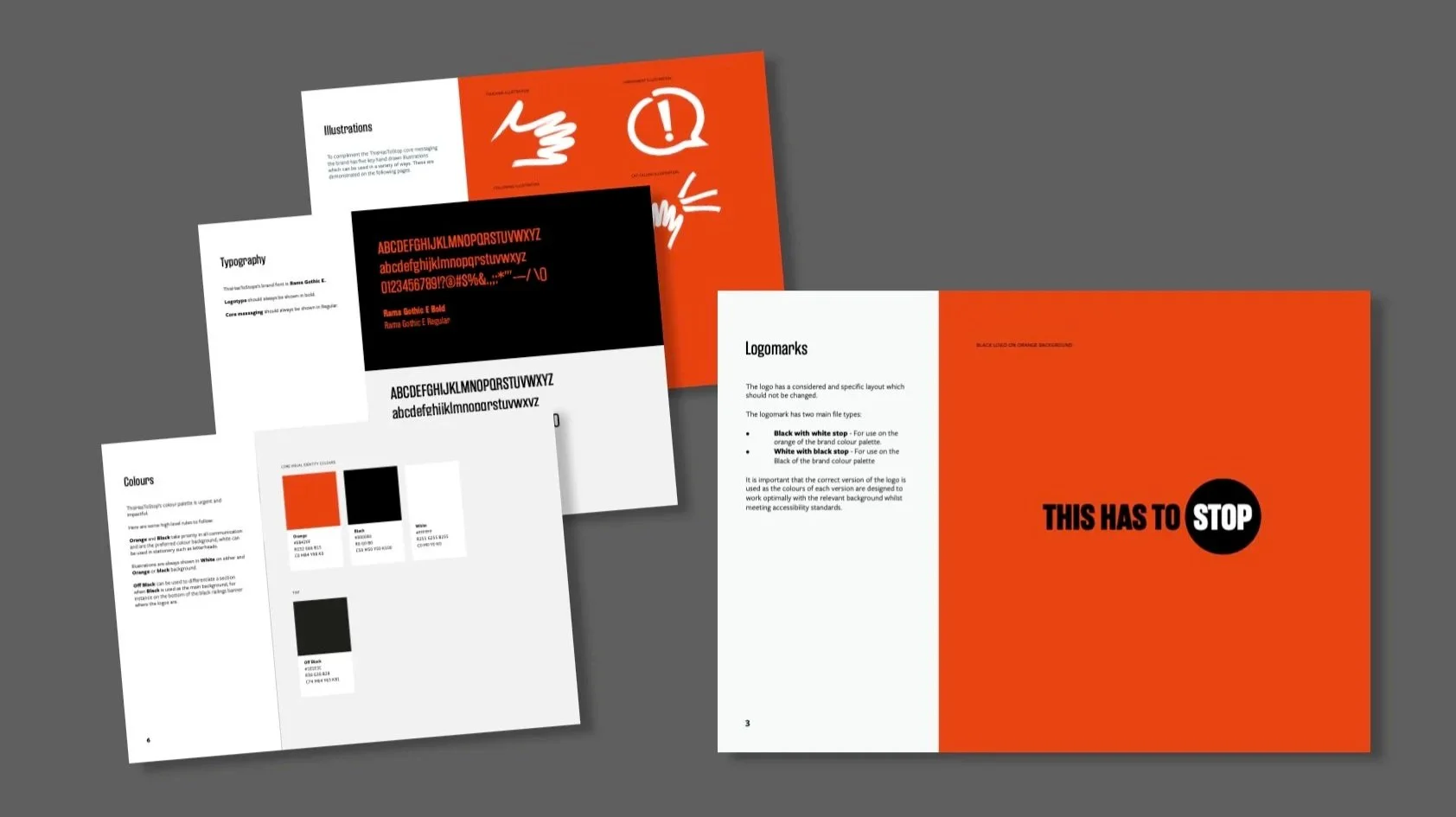
ThisHasToSTOP brand kit
Including logos, guidelines, illustrations and support, the brand toolkit is available on request for organisations ready to delivery a localised ThisHasToSTOP programme.