
What works?
A sticking plaster won’t help, but you can still take first steps to achieving real change.
Interventions grounded in behavioural science can change communities
Real impact
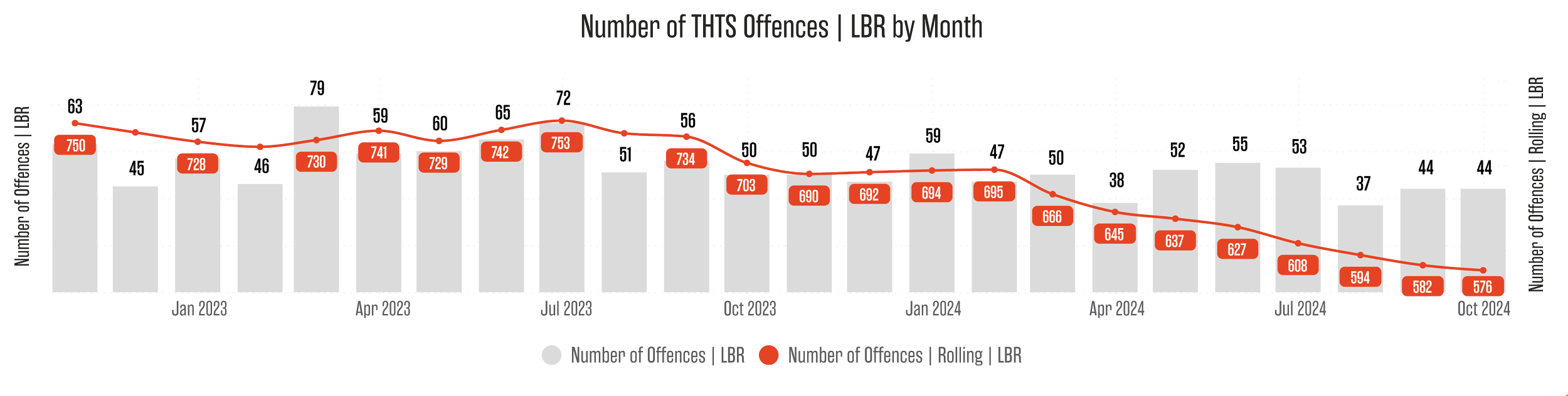
ThisHasToSTOP achieved a 20% reduction in harassment offences in its first year, which means offences were cut by by twice as much as other London boroughs during the same period.
20%
reduction
The rate of reduction in offences was twice as fast compared to neighbouring London boroughs in the same period.
Why does it work?
This page explores the four key approaches used in the ThisHasToSTOP programme – Enforcement, Education, Allyship and Active Bystander training – explaining how each functions, the research behind it, and how using all these approaches together can create safer communities.
Enforcement
Behavioural science shows that people’s actions are strongly influenced by perceived risk and social norms.
When enforcement is consistent and visible, potential perpetrators understand that harassment, assault, or misogynist behaviour carry real consequences, such as fines or criminal investigation. This increases the perceived cost of harmful behaviour, in turn reducing the likelihood it will occur - a principle that is at the heart of Deterrence Theory.
This contrasts with current perceptions, where perpetrators often believe they can engage in sexist behaviours with impunity.
Enforcement also signals what is socially acceptable - if people perceive that harassment is ignored or tolerated, it reinforces harmful norms.
Clear, visible enforcement combined with community trust can make harassment less tolerated and increase reporting.
_
‘
Effective enforcement depends on awareness of the law, trained police or enforcement teams who take action, and active bystanders who report harmful behaviour, creating a positive feedback loop that strengthens trust in the system.
Clear, visible enforcement combined with community trust can make harassment less tolerated and increase reporting. This approach aligns with the national VAWG strategy that introduced specialist sexual offence investigation teams to hold perpetrators to account.
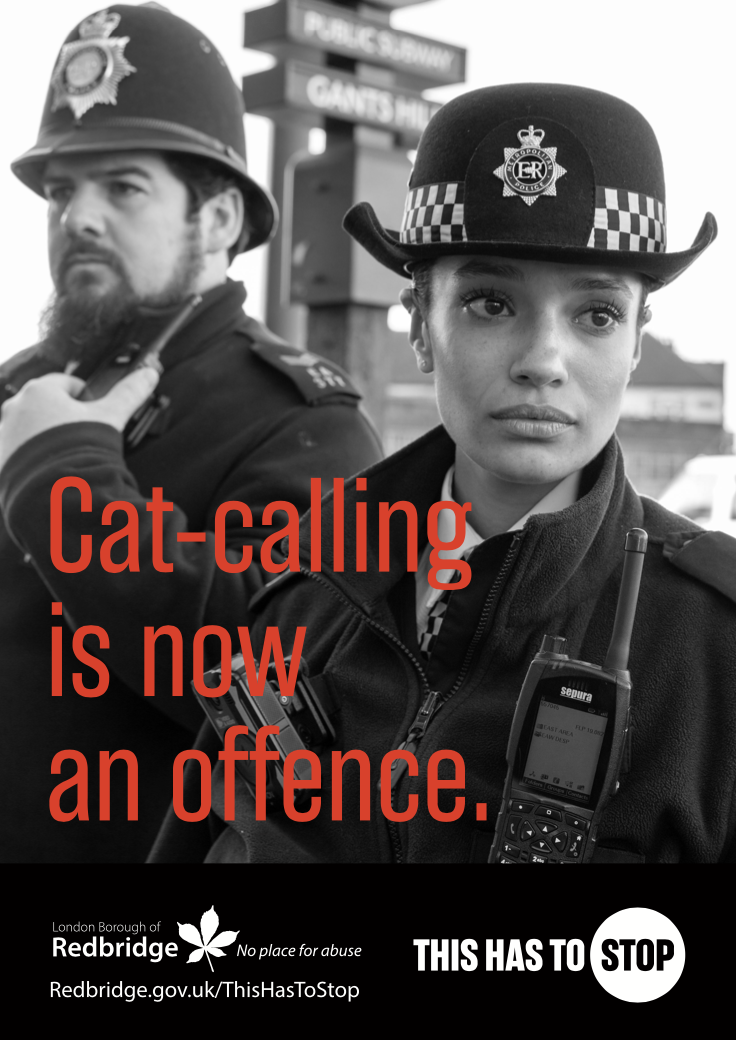
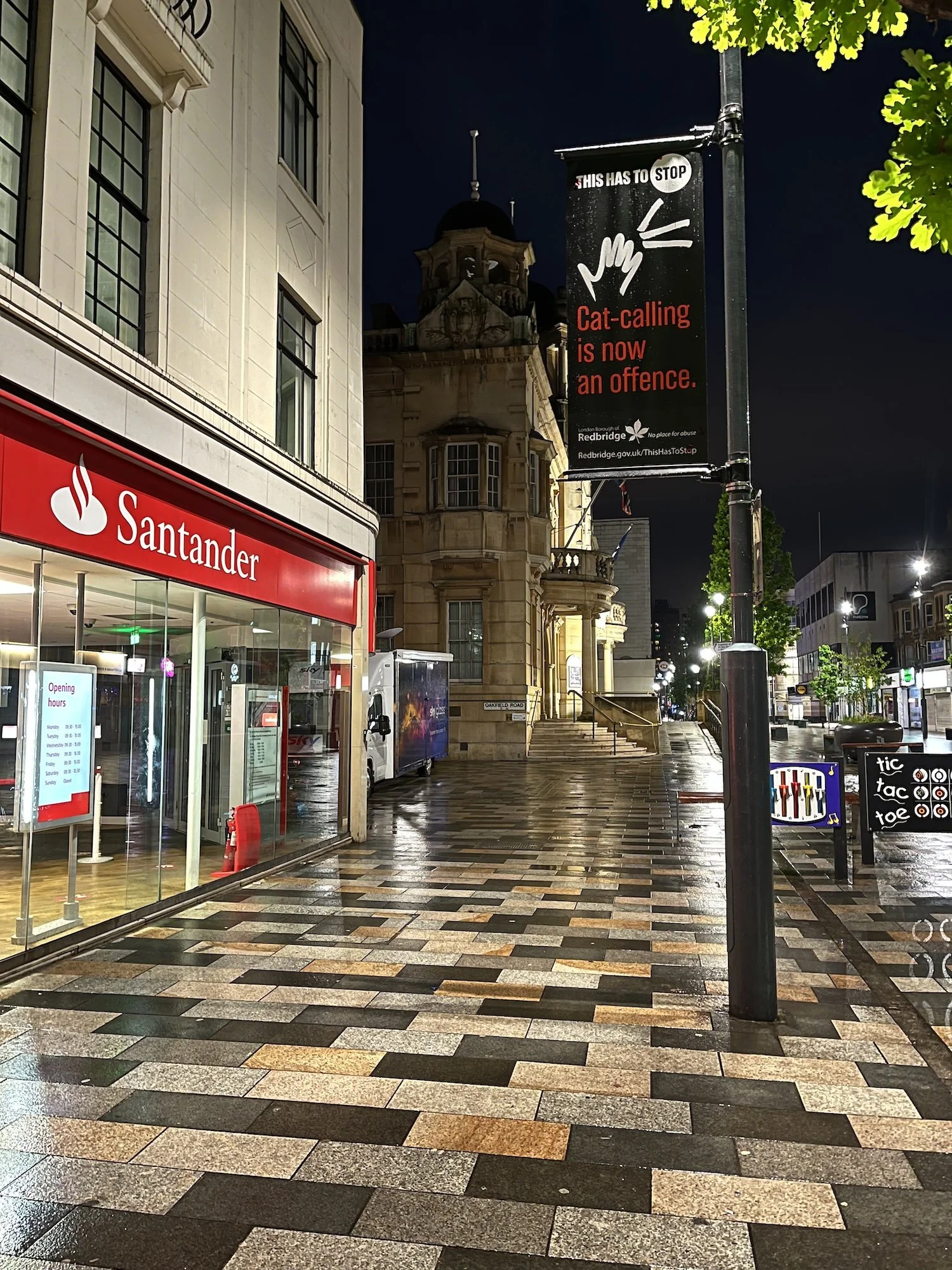
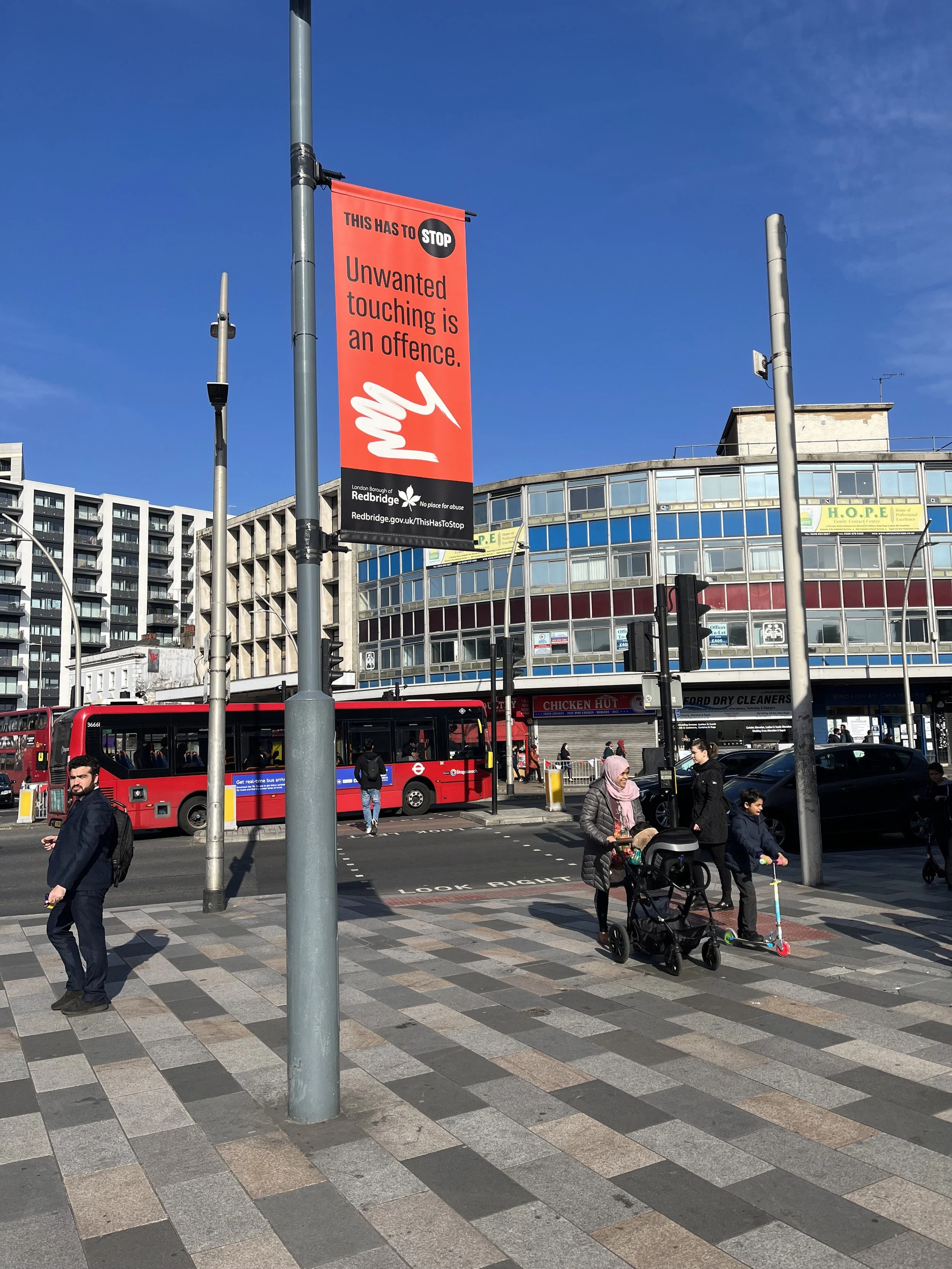
Recognisable local police officers posed in familiar Redbridge locations to raise awareness of the new Public Space Protection Order targeting sexist street harassment. At the same time, lamp post banners, below, highlighted individual offences. This high visibility campaign was shown on every shopping street in the borough, creating broad recognition and high levels of awareness.
Education
The research is clear that school-based programmes are among the most effective ways to prevent violence.
Behavioural science tells us that young people’s ideas about what is normal and acceptable are still forming, especially during adolescence. Schools and other educational settings play a key role in shaping these social norms.
Students are strongly influenced by peers, media, and social media, especially around the time of the transition to secondary school. This is a time when harmful attitudes and behaviours often start to emerge.
Education provides a safe space to challenge these harmful influences and develop critical thinking. Repeated, structured opportunities to question assumptions and practise respectful behaviour build self-efficacy. Students learn they can recognise harm, speak up, and respond appropriately. Real-life scenarios in lessons also help students develop empathy for people who are different from them. Higher empathy with women and girls reduces the likelihood of causing harm and can lower misogynistic attitudes.
These interventions work best when delivered over time and by trusted adults, which strengthens the Messenger Effect - students are more likely to absorb messages from people they respect.
This way, well-designed programmes can reduce acceptance of sexist attitudes and interrupt harmful gender norms before they become entrenched.

Education provides a safe space to challenge harmful influences and develop critical thinking.
_
‘
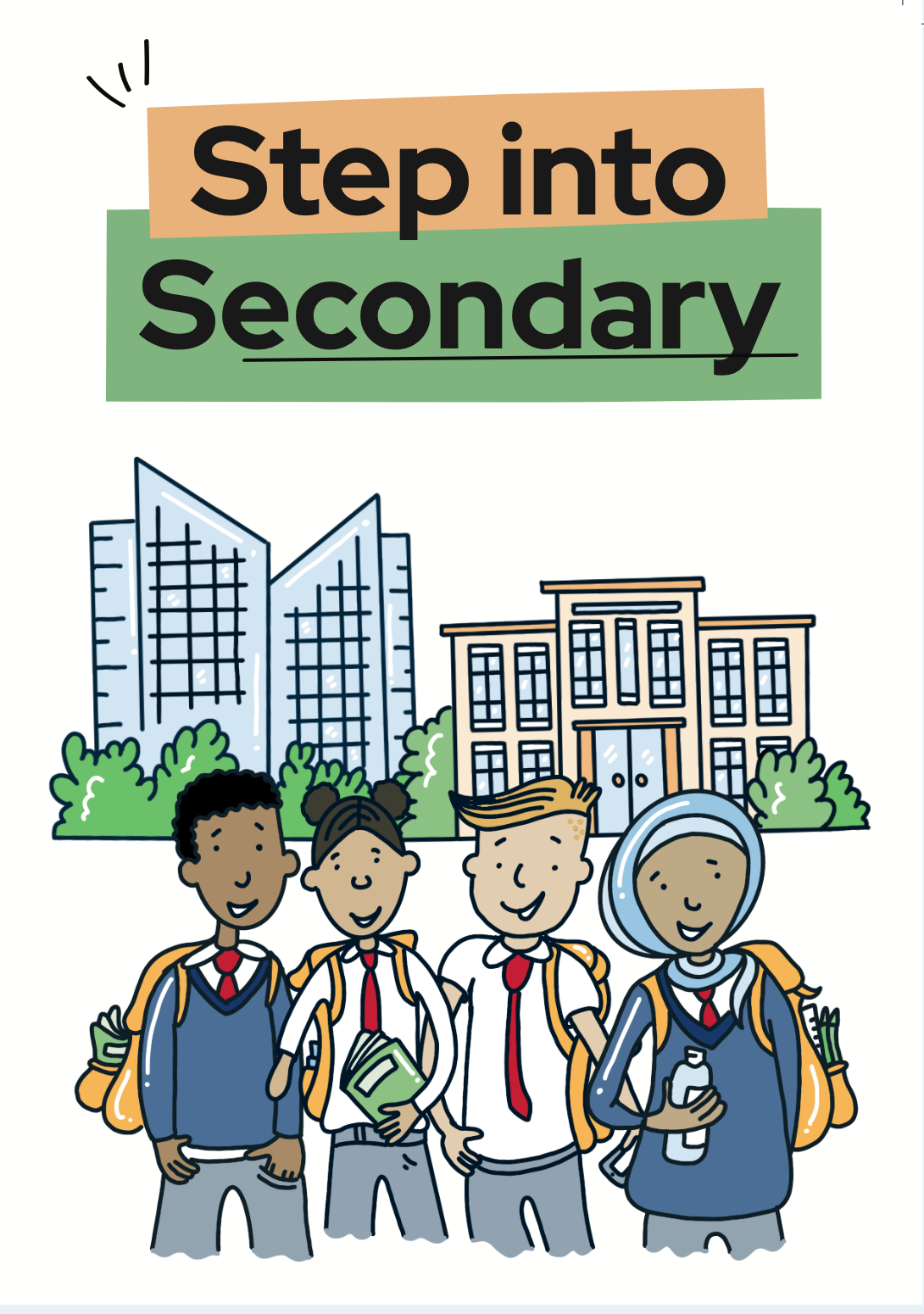
A transition leaflet for parents and young people, together with comprehensive resources for teachers and schools, provides a powerful way of tackling misogyny before it becomes an issue in the next generation.
Allyship
Preventing violence against women and girls is everyone’s responsibility. It is vital to shift the perception that this is ‘a women’s problem’ and men and boys should know that they have a role to play.
Visible allyship signals that misogyny and harassment are not acceptable.
_
‘

Research shows that programmes encouraging allyship can shift attitudes and behaviour, and help frame it as a collective responsibility.
When men act as allies, they help challenge sexist behaviour and support those affected. Behavioural science shows that people are influenced by social norms – they copy what they see others doing. When people see their peers challenging harassment, they are more likely to do the same. Visible allyship signals that misogyny and harassment are not acceptable and strengthens social expectations that speaking up is normal and supported by others.
Allies also leverage the messenger effect. Messages are more persuasive when delivered by someone the audience respects or relates to. Hearing anti-misogyny messages from a fellow man, for example, can be particularly effective in shifting attitudes. Over time, as more people act as allies, this can reach a critical mass, making positive behaviours feel normal and pushing harmful behaviour to the margins.

ThisHasToSTOP made links with male community leaders for an initiative called Real Men Talking which was featured in talks, on TikTok, on posters and using digital displays throughout the borough. The Real Men discussed issues of misogyny, harassment and the roles men should play from a multi-community perspective.
Active Bystander training
Active bystanders play a crucial role in preventing violence and challenging harmful behaviour.
When someone speaks up or intervenes, they signal what is acceptable and what is not. This helps shape social norms, especially within peer groups, and shows others that harassment or abuse will not be tolerated. Active bystanders also increase perceived risk for potential perpetrators. When people know their harmful actions may be challenged, they are less likely to act.
Behavioural science identifies common barriers that stop people from acting. Many hesitate because of diffusion of responsibility, assuming someone else will step in or a fear of social consequences.
When someone speaks up or intervenes, they signal what is acceptable and what is not.
_
‘
Bystander training can overcome these barriers by building skills and confidence, and help to turn stepping in into the default behaviour. When people see that speaking up is both expected and normal, they are more likely to act automatically in similar situations.
Comprehensive, high-quality programmes can even shift attitudes. Research shows that participants may develop more gender-equitable beliefs and a stronger understanding of the impact of harassment.

The Step In workshop has been delivered at youth clubs, businesses and community groups across the borough, as well as to hundreds of Council staff. We simplified bystander intervention to three memorable steps, supported by training, reinforcement and materials like foldable the pocket card, below.
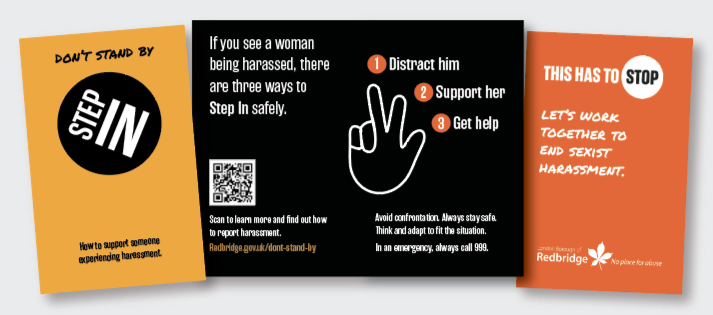
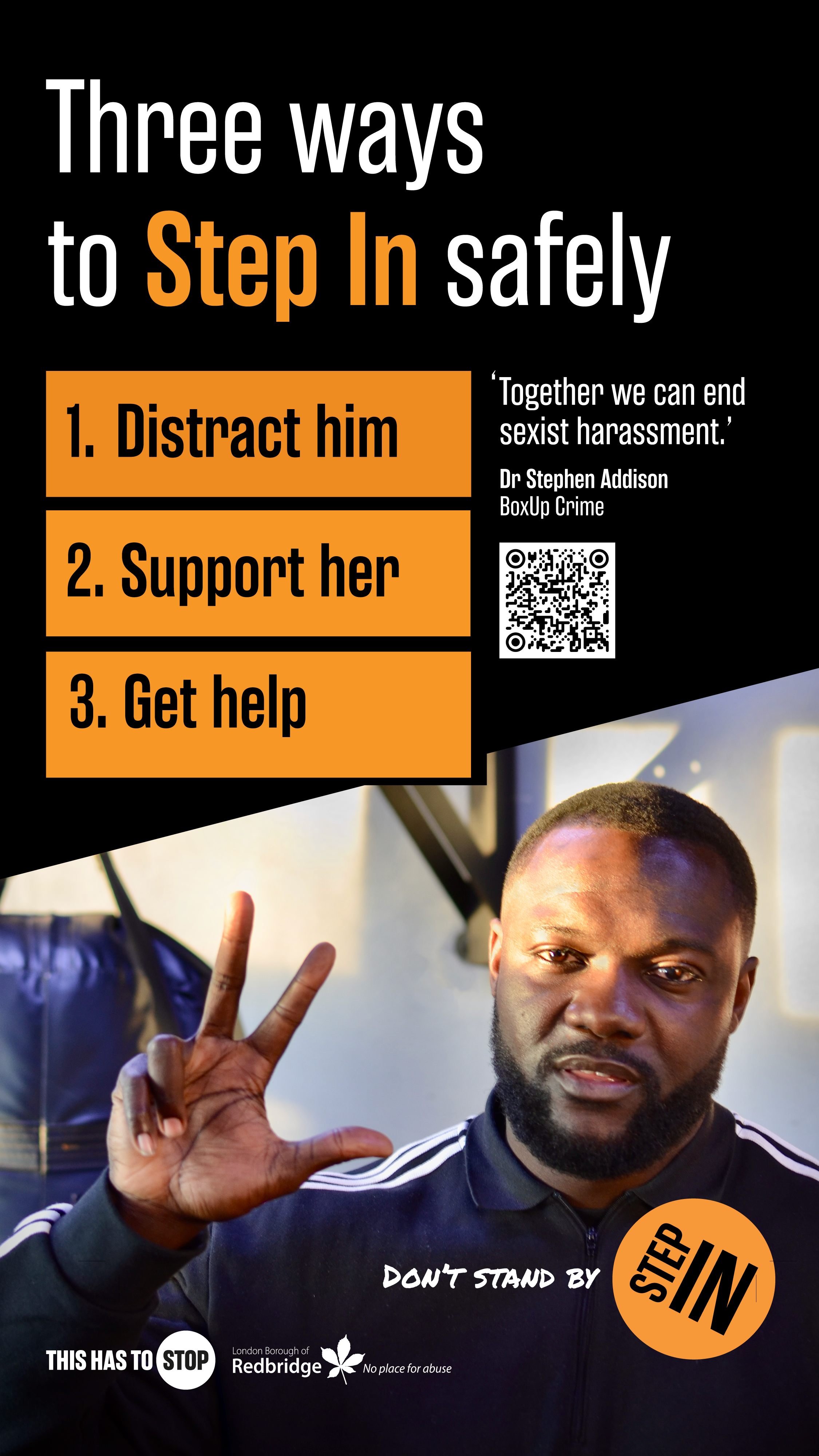
Our bystander training and learning strand is called Step In, serving as a positive call to action.