Collecting data in schools
While schools capture significant amounts of data, few currently log misogyny in a way that is easily recorded, monitored and addressed.
A key part of our Step In for schools programme was ensuring that school monitoring systems were optimised for effective data collection to track misogynistic incidents.
Schools capture significant amounts of information about their students, including performance, attendance and outcomes. Much of this is linked to statutory reporting requirements.
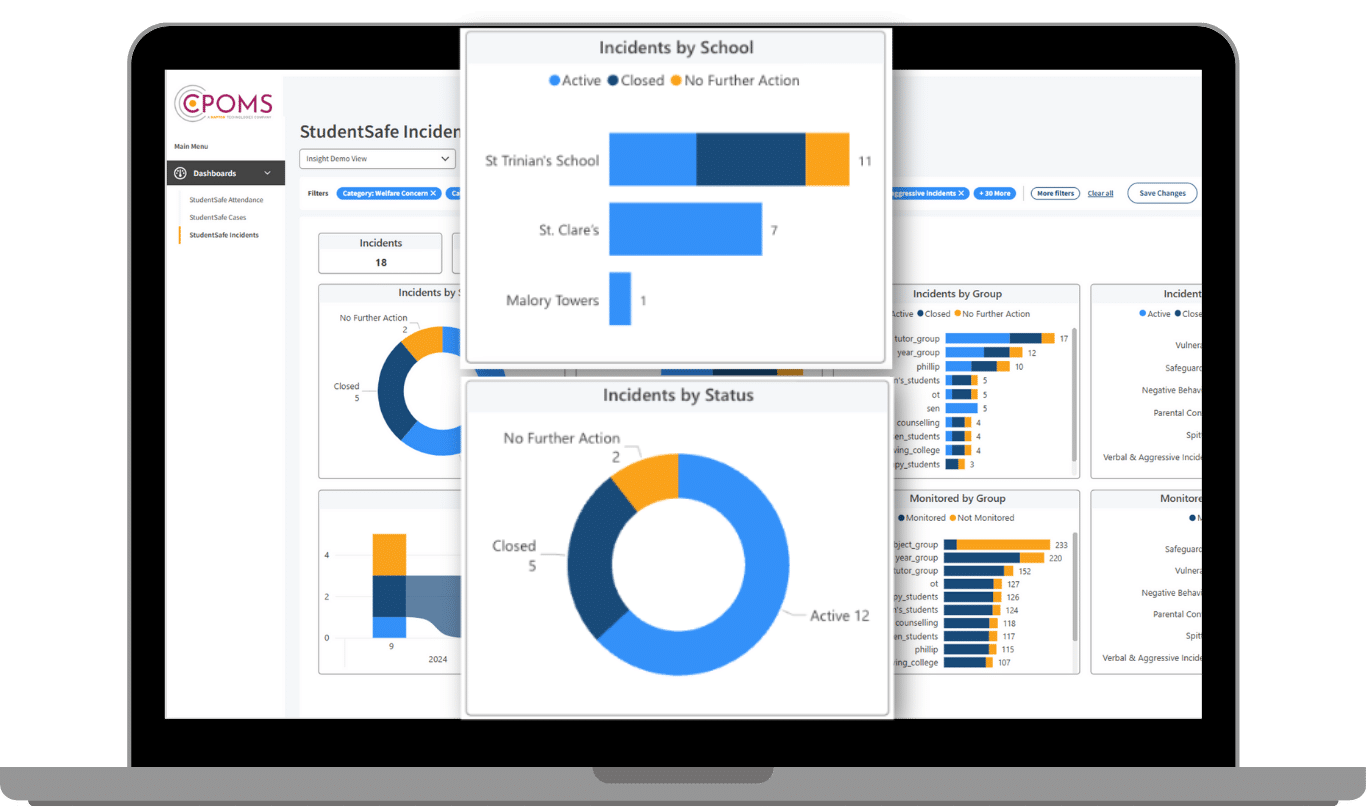
When it comes to behavioural data, school databases, such as CPOMS, SIMS and MyConcern, do enable accurate record-keeping of incidents and breaches of school codes of conduct. Many schools already code issues related to harmful sexual behaviours, but few currently log ‘misogyny’ or ‘gender-based violence’ in a way that is easily recorded, monitored and addressed.
And while many seek to promote a culture that challenges violence against women and girls, it’s not possible to achieve this without an accurate understanding of the ‘when, who and how’ of the incidents that are happening.
Effective data coding
Misogyny and gender-based violence should be coded in a way that enables easy tracking of incidents and trends, allowing schools to objectively review the scale of the issue and the impact of any approaches taken to resolve the issue.
The most comprehensive approach would see these incidents recorded and flagged with a consistent code. These data would be regularly reviewed by governors and safeguarding leads to understand what works and identify opportunities to intervene.
New government requirements put the spotlight on education as a vital space for supporting positive behaviours, including challenging male violence. But without a system to accurately and consistently record and report, it will be difficult to assess what is working.
It’s not possible to achieve a culture that challenges violence against women and girls without an accurate understanding the ‘when, who and how’ of the incidents that are happening.
—
‘