
The view from Redbridge
Women’s safety was identified as a key priority by Redbridge’s community-led Crime Commission
The Council responded to a genuine demand for real change
The view from Redbridge
In Autumn 2020 Redbridge Council carried out engagement with residents on their crime and safety priorities and from these learnings the borough set up a Crime Commission to make recommendations on community safety.
Women’s safety a key priority
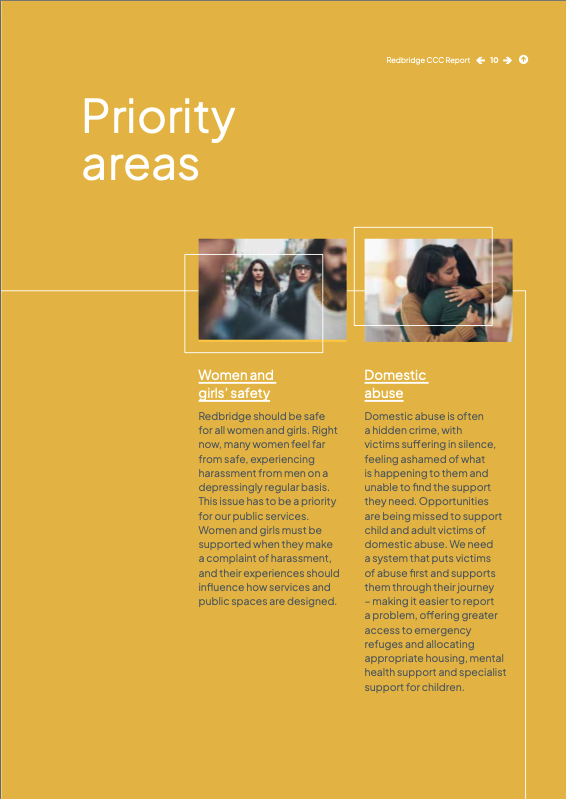
Women’s safety was identified as a priority with nine recommendations agreed. One of these was to develop and deliver a public communications and engagement campaign, based in behaviour change science, that targeted men’s behaviour and drive culture change. This initiative became ThisHasToSTOP.

Key moments along the journey
The murders of Maria Rawlings and Zara Aleena so soon after the murder of Sarah Everard cemented VAWG as a pressing issue in Redbridge and London as a whole.
Redbridge’s Public Space Protection Order, which was launched in 2023, made Redbridge the first council to treat sexual harassment as an offence.
Winning the LGC campaign of the year award was a big boost and helped to validate the commitment shown by partners, council officers and senior leaders.
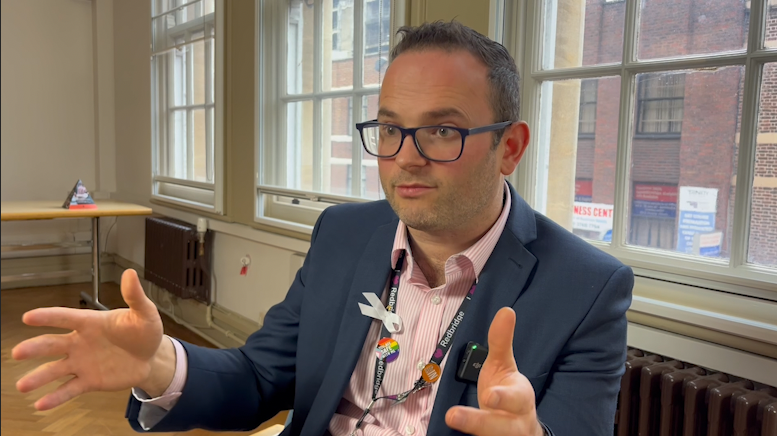
John Richards is Redbridge’s Director of Community Safety and Cohesion. He has guided ThisHasToSTOP from its inception.
The response from Council colleagues
Our colleagues have been extremely supportive. Professionals understand the breadth and depth of the issues faced by women and girls and understand the limits it puts on the lives of all residents.
Redbridge Council has a vibrant and active staff network community, especially the Redbridge Women’s Network. The members of this network were very involved in the women’s safety work carried out before the launch of This Has To Stop and were very involved in pushing out the messaging internally.
The issue has gained priority status as the mood of the country on this issue has changed following the murder of Sarah Everard. Although professionals working in the sectors closely aligned to VAWG have always understood its importance, it has taken the wider societal conversation, being backed up by the work of local professionals, to emphasise how all council services can make an impact.
Sharna Ahmed, Women’s Safety Lead at LB Redbridge and Project Manager of ThisHasToSTOP
Making the case internally
Women’s safety was in the forefront of most people’s minds following the murder of Sarah Everard. Then, the following year, two women were murdered in the borough after being attacked in public while walking alone. So bringing our internal stakeholders together was relatively simple.
The Council Leader at the time felt very strongly that there should be a local response to addressing the issue of violence against women and girls. He asked the Community Safety team to talk to local women and hear their concerns.
At the same time, the women within the team had all experienced some form of harassment on a fairly regular basis, so we were ready to embrace this as a genuine challenge that affected all of us.
Securing internal support
About half of all residents (and voters) in the borough are women and we made this point on a regular basis. We also shared evidence of real life experiences of female residents with colleagues and Council members.
We had the extra advantage of a compelling data set, in the form of an independent survey developed by a Redbridge resident, which detailed women’s experiences of harassment in the borough. This persuasive data helped people realise that most women experience some level of harassment with a high level of frequency. We made the personal argument, too, encouraging male colleagues to speak to the women in their lives and hear their experiences; we knew that the people affected by this were their wives, daughters, sisters and friends.
We also wanted to ensure we didn’t just take a sticking plaster approach. We wanted real change, so a key factor was getting the borough to make a long-term commitment to creating genuine behaviour change, driven by the evidence, rather than just making a quick ‘comms’ response.
Securing budget
The Crime Commission was set up to include a dedicated budget that was committed to the priorities identified by the community. Having identified women’s safety as a key priority, the Crime Commission made it possible for ThisHasToSTOP to be adopted as a priority area of work.
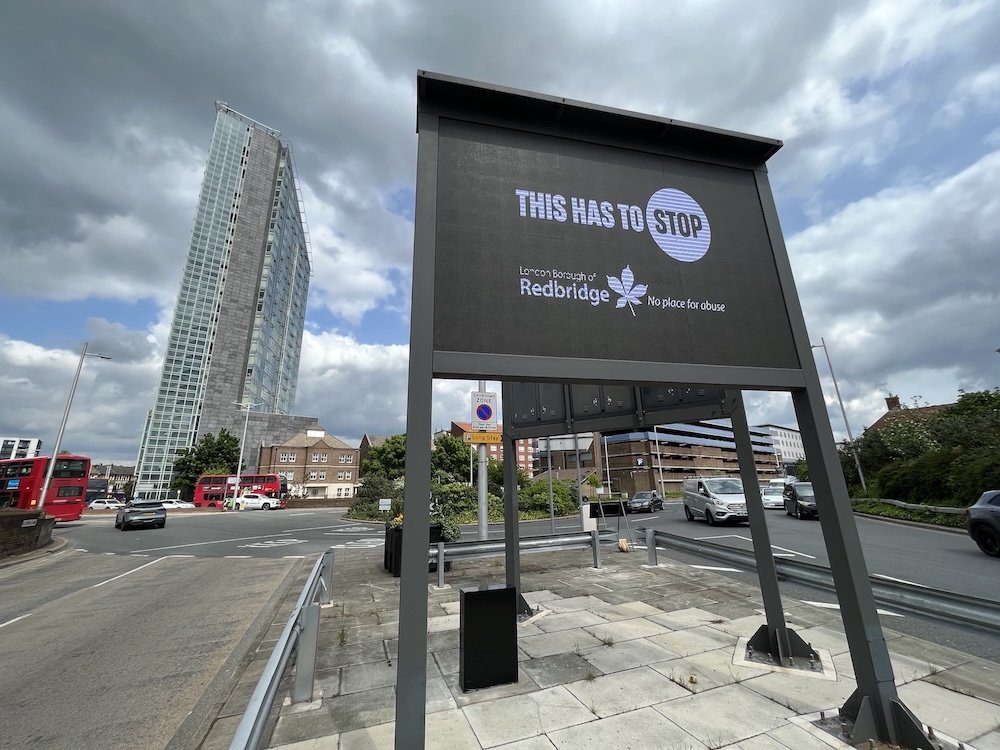
The campaign made good use of digital signboards to raise awareness among motorists.
A key factor was getting the borough to make a long-term commitment to genuine behaviour change, driven by the evidence, rather than just making a quick ‘comms’ response.
_
‘
Setting up the Public Space Protection Order (PSPO)
The PSPO covers the whole borough and includes clauses prohibiting any behaviour which could cause ‘harassment, alarm or distress’. The language in the PSPO is not gendered so anyone can be the victim and anyone over 18 can be a perpetrator.
It provides a useful tool for holding perpetrators to account. It enables council enforcement and police officers to hand out fixed penalty notices. Causing an immediate impact and stop on the problem behaviour.
Sexual harassment bill currently not enforceable so provides a stop gap for it to be made an offence and have consequences in the interim.
At the same time, it gave us a valuable ‘line in the sand’ for awareness raising purposes. Our campaign posters made clear that sexist harassment was now an offence.
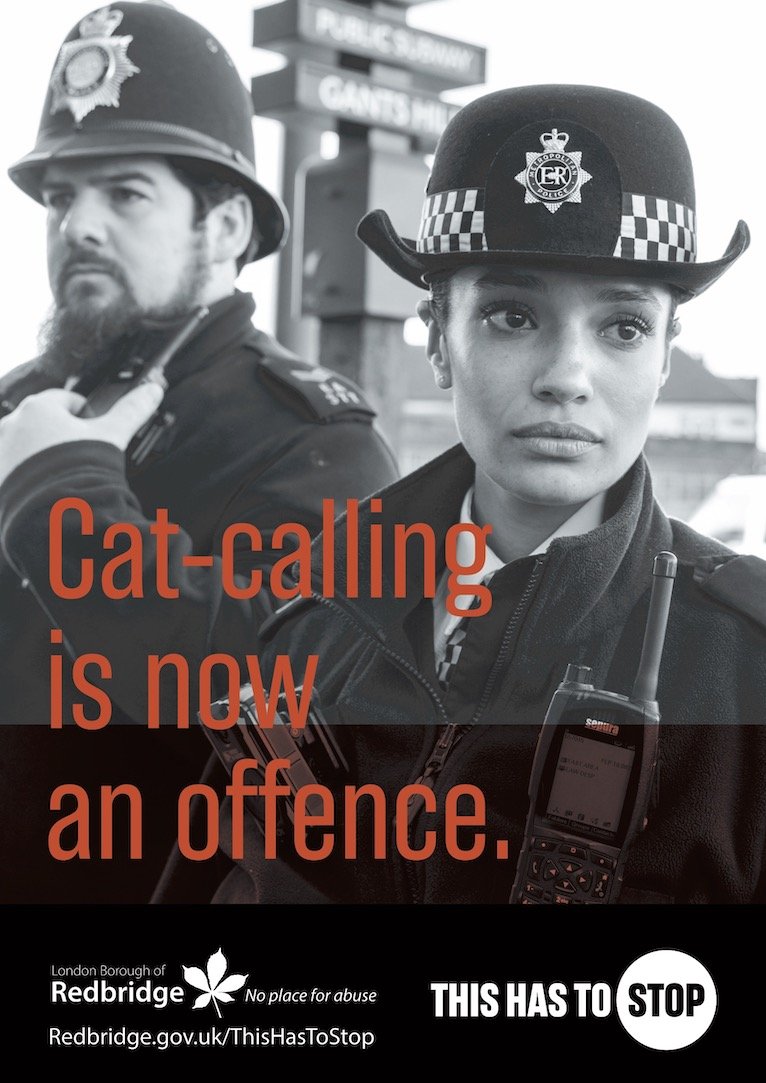
For more details about setting up the PSPO please visit the page on Enforcement.
Working in partnership
We started by building on existing relationships and we found that people were open to being persuaded to address the issues of harassment and underlying misogyny that had been identified.
People recognised the data that showed the uncomfortable and sometimes frightening experiences of many women and girls, and this led to a genuine commitment to try doing things in ways that were different, as well as more interesting.
For example, we encouraged male decision makers to sanity-check the research by having conversations with the women in their lives, such as wives, sisters, daughters and friends.
There’s no doubt that through these conversations we reached a collective sense that this was the time for women to stop accepting harassment as the norm, and that collectively we needed to something that had a chance of making things better.
Schools
We found that schools were happy to buy-in when we showed clear links between the campaign’s aims and the national curriculum, particularly its Relationship, Health and Sex Education (RHSE) requirements. Our focus on co-production, involving teachers and parents in the development of our Step In classroom materials helped to make the offer even more attractive to schools.
Joining things up
ThisHasToSTOP has been effective at breaking down silos internally and externally through a shared set of goals and a shared vision. Cross-partnership work was vital in shaping and co-producing ThisHasToSTOP and Step In resources and materials.
We found that by building strong relationships with key people, and keeping them involved along the journey, meant that they became powerful ambassadors for the campaign to their organisations and communities.
Consistent communication and co-working has created a network of professionals between these organisations that have trust and confidence in each other. This has positively spread into other areas of work wherever cross partnership is needed.
ThisHasToSTOP is driven by cross-partnership working; to make meaningful systemic change, all parts of the system must buy in.
This is why the different phases focus on different target audiences and service areas. For example, the first phase, dubbed ‘It’s the Law’ focussed on our Public Space Protection Order, as well as our work with the police to support enforcement against perpetrators of sexual harassment. Similarly, we found the expertise of our colleagues in the Education department was invaluable in helping to make Step In for Schools as impactful as it is.

Local students helped to co-create materials focusd on young people.
ThisHasToSTOP is driven by cross-partnership working; to make meaningful systemic change, all parts of the system must buy in.
_
‘
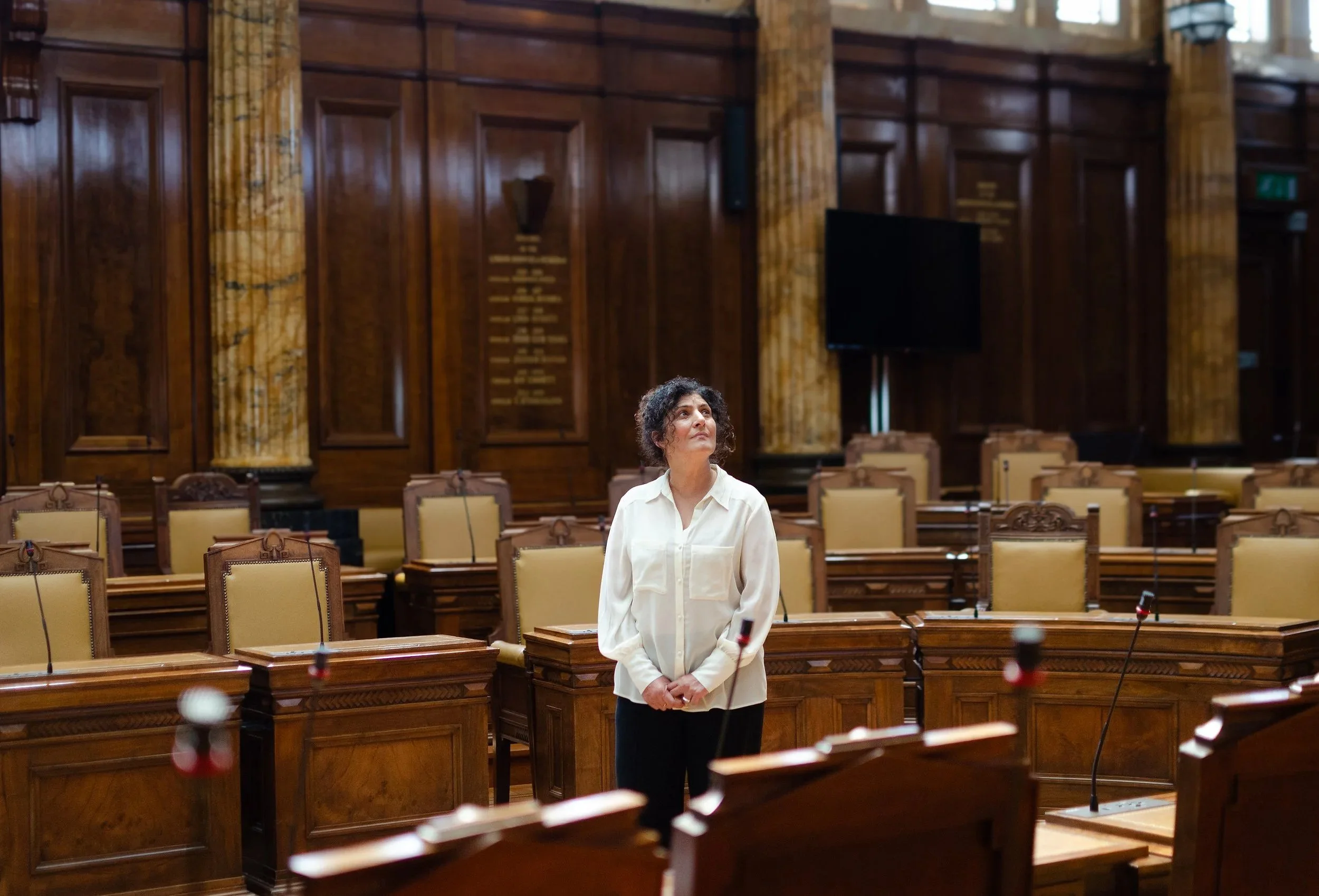
‘Zara would want us to reflect, to challenge, to be brave, to stand up, to speak out – at school, on the street, at home. She would ask us, she would join us and she would say: let's step in, let's be brave, let's change our culture.’
Farah Naz, Activist and Aunt of Zara Aleena